
Lovable is great for spinning up a polished prototype from a prompt. Its credit pricing, hosted-runtime lock-in, and thin backend control send plenty of builders looking for a Lovable alternative once they move past the demo.
If you're hitting those walls, the strongest options right now are Bolt for a near-identical prompt-to-app flow, Base44 for full-stack no-code, and Superblocks for governed internal apps.
I shortlisted 11 Lovable alternatives from a wider field, comparing them on the factors that drive a switch, from pricing model and code ownership through backend control and production readiness.
I gave each the same test, building a small app and then trying to change it, since the wall most builders hit is the second feature, well after the first.
Here's the ranked list, what each tool does well, honest pros and cons, pricing, and who it fits. The best pick depends on what happens after the first demo.
11 best Lovable alternatives: TL;DR
Here's the shortlist, with what each one does best:
- Bolt.new: Best for a near-identical prompt-to-app experience
- Base44: Best for full-stack no-code building
- Replit: Best for a hosted cloud IDE with an AI agent
- v0 by Vercel: Best for polished React and UI generation
- Superblocks: Best for governed enterprise internal apps
- Emergent: Best for prompt-to-production with code ownership
- Bubble: Best for mature no-code web apps
- Cursor: Best for developers who want an AI IDE
- WeWeb: Best for custom front-ends on your backend
- Glide: Best for spreadsheet-to-app builds
- UI Bakery: Best for visual internal-tool building
Why look for a Lovable alternative?
Lovable is a strong AI app builder, and for design-focused prototypes it ranks among the best. It generates polished, investor-ready UIs from a prompt with auth and a database. A few recurring pain points push builders to look elsewhere.
Credit pricing that's hard to predict. Lovable meters per prompt, and costs climb the harder you tweak and debug. A heavy iteration session can burn through credits fast, which is one of the most-cited reasons people shop around.
Hosted-runtime lock-in. Apps run on Lovable's hosted runtime, and moving off later means a rebuild. Code portability is one of the four constraints buyers cite most often.
Thin backend control. Lovable leans on Supabase and produces great front-ends, while deep custom backend logic and fine-grained control still strain its design-first approach. Our Lovable review covers where it holds up.
No enterprise governance. For teams building internal tools on live business data, Lovable lacks the RBAC, audit trails, and deployment control production requires. The Lovable vulnerabilities of 2025 showed the stakes when consumer builders ship without those controls.
Which Lovable alternative should you choose?
Here's the quick version before the deep dives:
- Choose Bolt if you want the closest 1:1 Lovable experience with better code visibility. Its token pricing drains fast on big builds.
- Choose Base44 if you want full-stack no-code with a bundled backend, less ideal for deep custom logic.
- Choose Superblocks if you need governed internal apps on private data. It covers only internal tools, with consumer products out of scope.
- Choose Emergent if you want a deployable web or mobile app with full code ownership and are willing to pay credit-based costs.
- Stick with Lovable if you mainly need fast, good-looking prototypes and its credit costs fit your budget.
11 best Lovable alternatives: at a glance
Here's how the 11 compare at a glance:
| 🏆 Platform | 🎯 Best for | 💰 Starting price (monthly) |
|---|---|---|
| Bolt.new | Near-identical prompt-to-app | $25/month |
| Base44 | Full-stack no-code | $20/month |
| Replit | Hosted cloud IDE with agent | $20/month |
| v0 by Vercel | React and UI generation | $30/user/month |
| Superblocks | Governed internal apps | $125/month |
| Emergent | Prompt-to-production, code ownership | $20/month |
| Bubble | Mature no-code web apps | $69/month |
| Cursor | AI IDE for developers | $20/month |
| WeWeb | Custom front-ends on your backend | $25/month |
| Glide | Spreadsheet-to-app | $25/month |
| UI Bakery | Visual internal tools | $25/developer/month |
Pricing correct as of August 2026. Verify with vendor.
The 11 best Lovable alternatives
1. Bolt.new
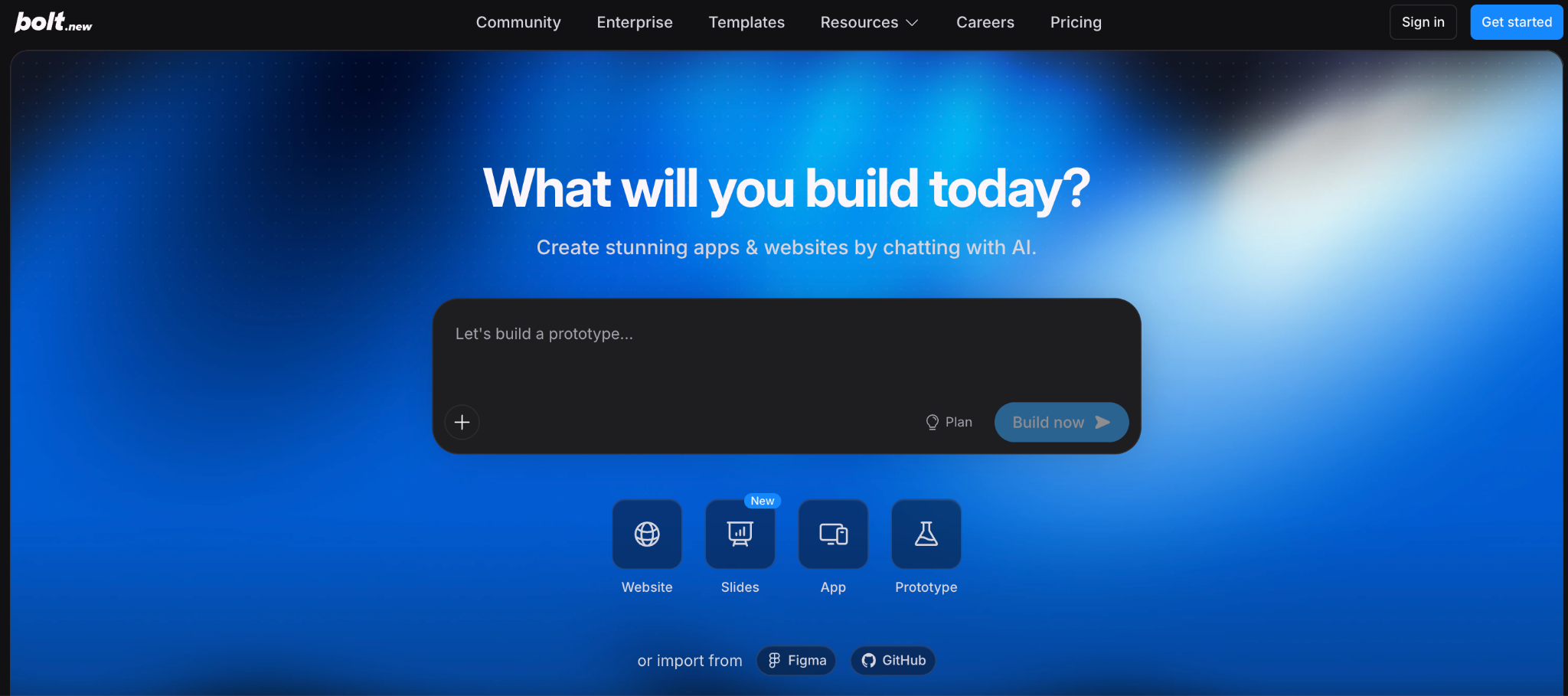
Bolt.new is the best Lovable alternative for a near-identical prompt-to-app experience with better code visibility.
Built by StackBlitz, it generates full-stack apps from a prompt and runs them live in the browser, with a built-in editor so you see and edit every line. It comes closest to Lovable's flow while leaning more toward code.
Key features
- In-browser full-stack: Generates frontend, backend, and database with zero setup.
- Live code editor: Inspect and edit the generated code directly.
- Expo mobile: Build React Native mobile apps through Expo.
Pros
- ✅ The most generous free tier here at 1M tokens monthly
- ✅ Code download and GitHub sync
- ✅ Fast browser-native iteration loop
Cons
- ❌ Token pricing drains fast on bigger builds
- ❌ You need some code comfort to iterate
Best for
- Builders who want Lovable's flow with more code control
- Founders validating an MVP quickly
Pricing
Bolt is free with 1M tokens a month. Paid plans start at $25 a month for Pro, which includes 10M tokens, with Teams at $30 a member per month. Enterprise pricing is custom. See Bolt's pricing.
2. Base44
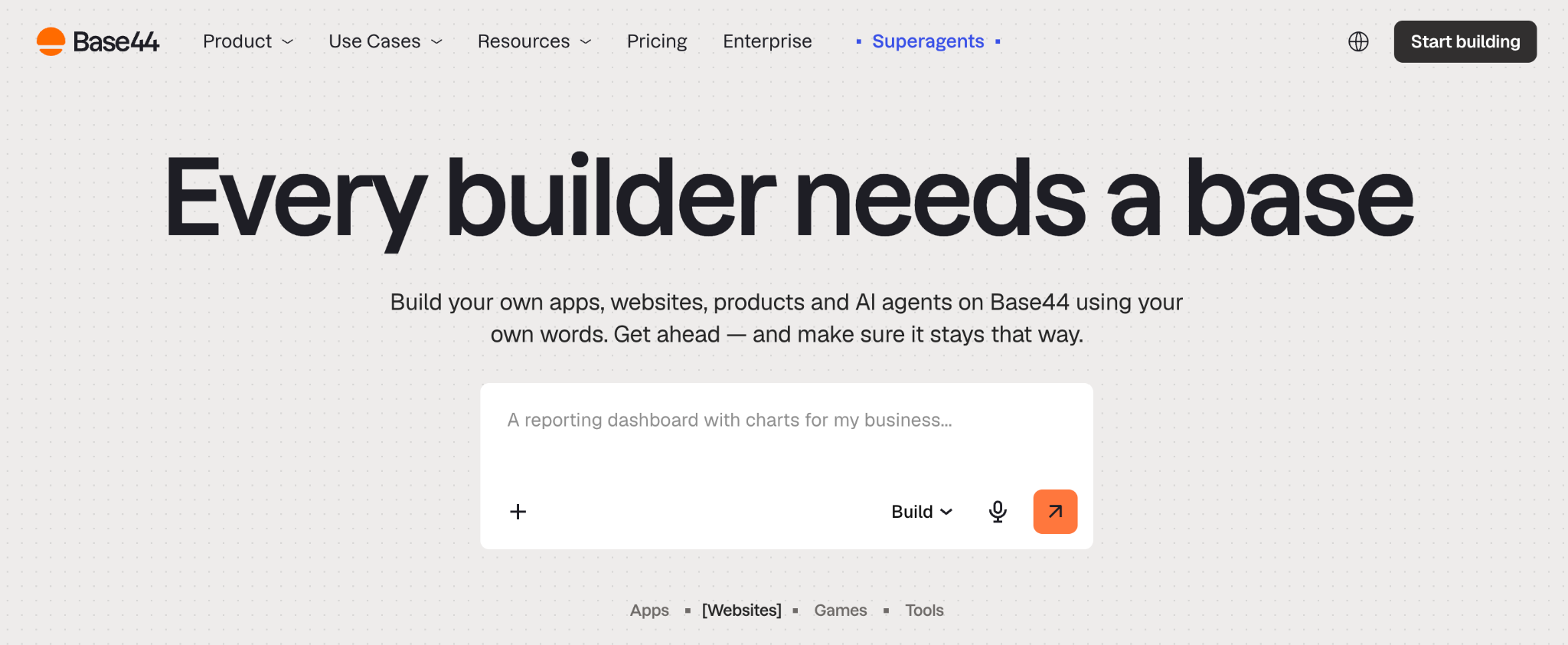
Base44 is the best Lovable alternative for full-stack no-code building with a bundled backend.
Now owned by Wix, it turns plain-English prompts into complete apps with a built-in database, authentication, and hosting, so non-technical builders ship without external services. Its Visual Edit mode adds layout control.
Key features
- Bundled backend: Database, auth, and hosting included.
- Visual editing: Layout and styling control beyond prompts.
- Wix backing: Wix-backed infrastructure and long-term support.
Pros
- ✅ Bundles hosting, database, and logins in one plan
- ✅ Approachable for non-technical builders
- ✅ Free tier covers a full first build
Cons
- ❌ GitHub export gated to the Builder plan
- ❌ Design control needs more manual work than Lovable
Best for
- Non-technical founders building full-stack apps
- Teams wanting an all-in-one no-code stack
Pricing
Base44 is free with 25 message credits a month. Paid plans start at $20 a month for Starter, with Builder at $50 a month, Pro at $100 a month, and Elite at $200 a month. See Base44's pricing.
3. Replit
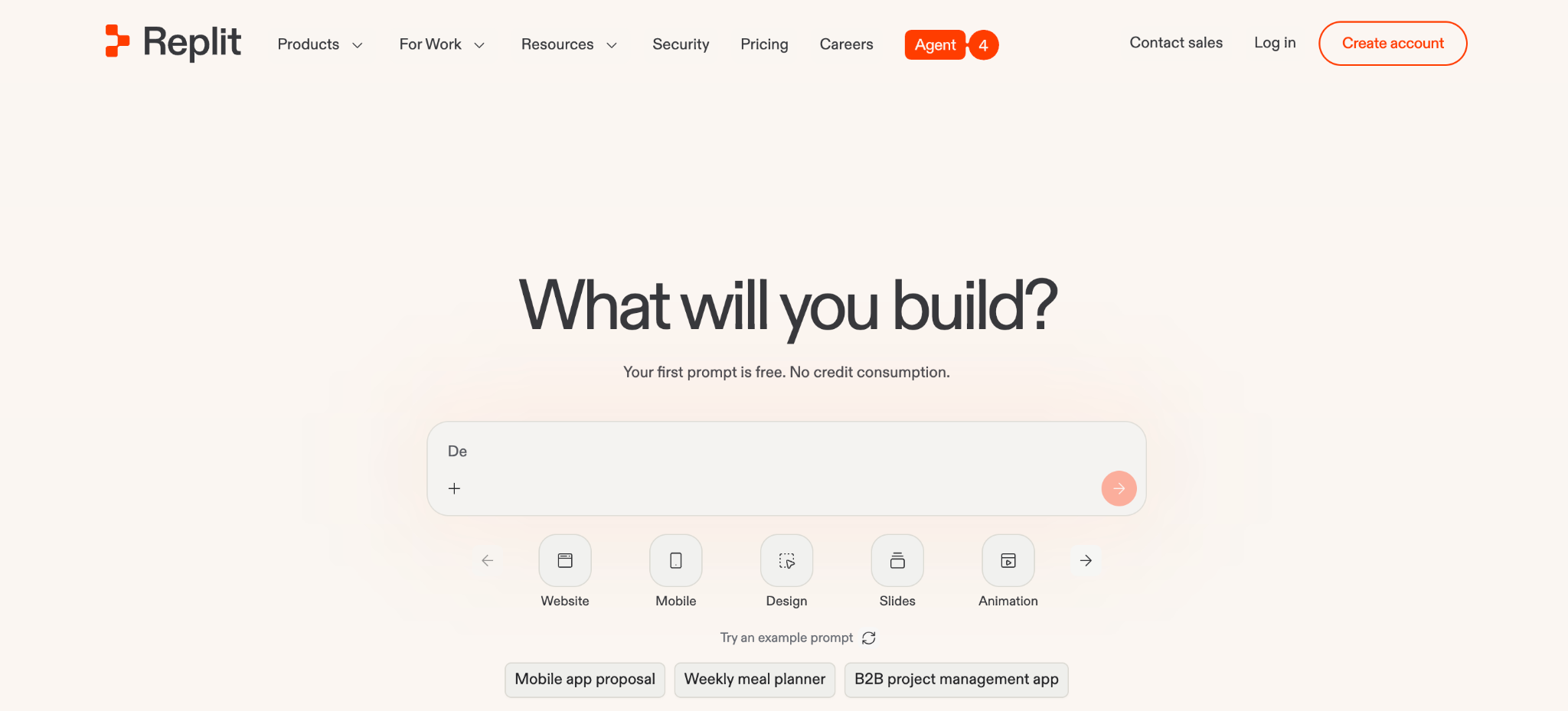
Replit is the best Lovable alternative for a hosted cloud IDE that lets an AI agent build and run your app.
Its agent plans and writes multi-file projects in a full browser IDE, supporting many languages beyond JavaScript. It suits builders who want AI help alongside full access to the codebase and live collaboration.
Key features
- AI agent: Plans and builds multi-file projects through chat.
- Full cloud IDE: Full editor, terminal, and database in the browser.
- Collaboration: Real-time multiplayer editing.
Pros
- ✅ Full code access and multi-language support
- ✅ SOC 2 certified with SSO on Enterprise
- ✅ Handles web, mobile, and backend builds
Cons
- ❌ Effort-based agent pricing gets unpredictable
- ❌ Built for prototypes more than enterprise production
Best for
- Developers and learners who want an AI agent inside a full IDE
- Teams prototyping across languages
Pricing
Replit is free on the Starter plan. Paid plans start at $20 a month for Core, which includes $20 of monthly credits, with Pro at $100 a month. Enterprise pricing is custom. See Replit's pricing. For more, see our Replit alternatives.
4. v0 by Vercel
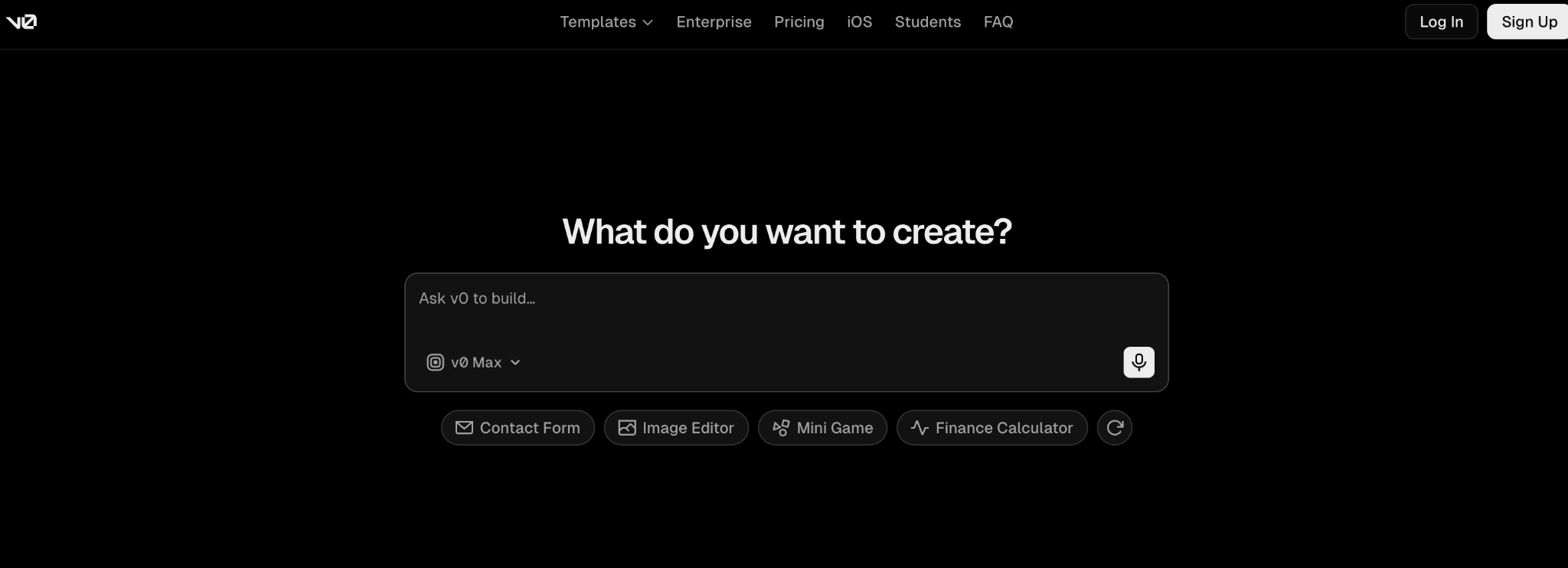
v0 by Vercel is the best Lovable alternative for polished React and UI generation.
It turns prompts, images, or Figma files into production-ready React, Tailwind, and shadcn/ui code, with the cleanest UI output in the category and a smooth path to Vercel deployment.
Key features
- UI generation: React with Tailwind and shadcn/ui components.
- Design import: Turns Figma or screenshots into UI code.
- Vercel deployment: Ships to Vercel with minimal friction.
Pros
- ✅ Cleanest, most production-ready UI here
- ✅ High-quality, editable frontend code
- ✅ Smooth deployment flow
Cons
- ❌ No backend generation, so you wire up your own
- ❌ Best value inside Vercel's own stack
Best for
- React and Next.js developers building UI
- Teams that want design-fidelity output
Pricing
v0 is free with $5 of monthly credits. Paid plans start at $30 a user per month for Plus, with Business at $100 a user per month. Enterprise pricing is custom. See v0's pricing.
5. Superblocks
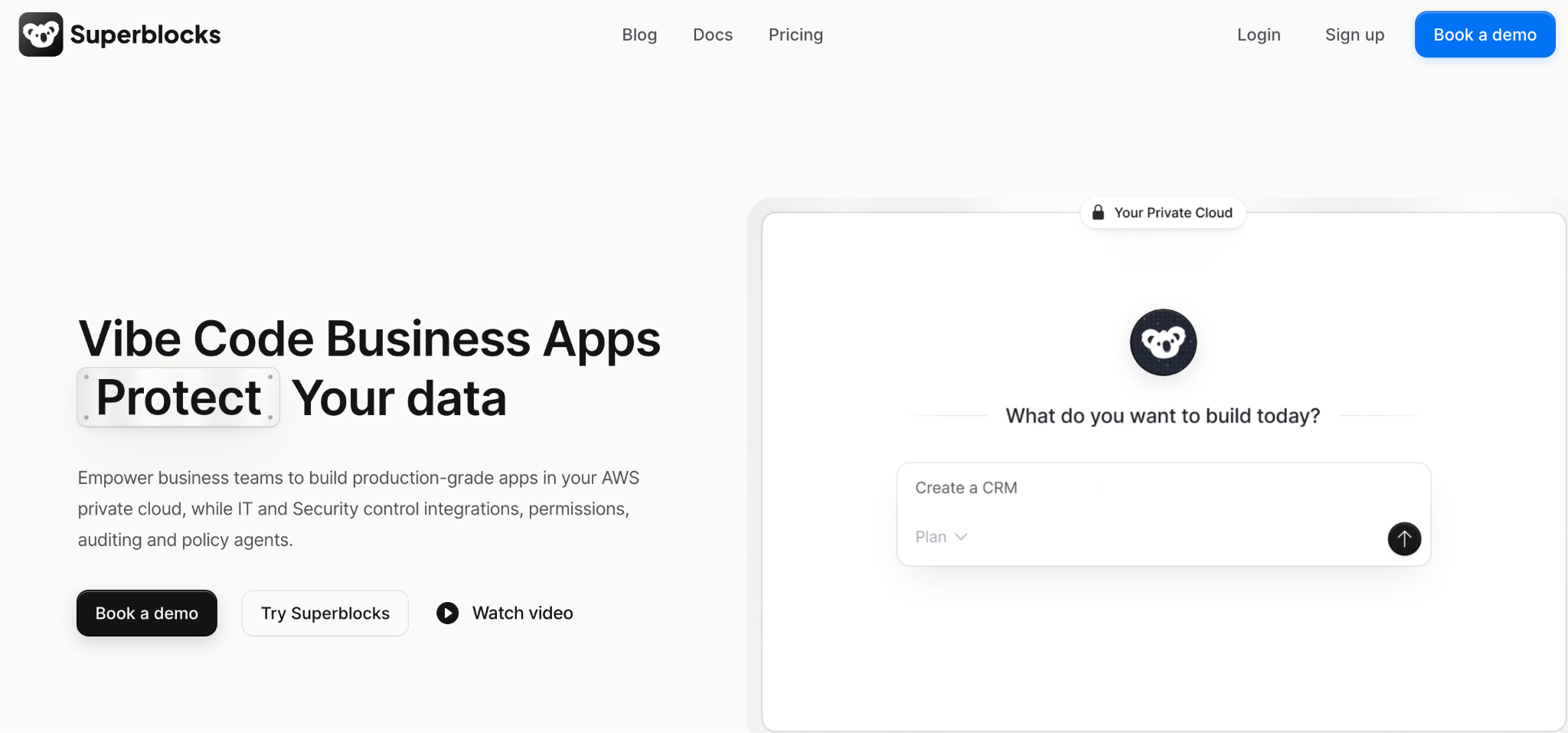
Superblocks is the best Lovable alternative for governed internal apps built with AI on private business data.
Lovable optimizes for consumer prototypes, while Superblocks builds production internal tools with RBAC, SSO, and audit logs from day one. Its Clark AI generates apps you can export as code, and the on-premises agent keeps data in your network.
Key features
- Clark AI generation: Turns prompts into full internal apps that inherit your governance.
- Code export: Apps export as React to edit or host elsewhere.
- Hybrid deployment: The on-premises agent keeps data in your VPC.
Pros
- ✅ Governance, RBAC, and audit logs built in from day one
- ✅ Connects to Snowflake, Salesforce, and internal APIs
- ✅ Prompt-to-app building with no vendor lock-in
Cons
- ❌ Focused on internal tools, with consumer products out of scope
- ❌ No native mobile app building
Best for
- Enterprises building internal tools on private data
- Teams needing governance and access control
Pricing
Superblocks starts at $125 a month for Teams, billed monthly, and includes a 14-day free trial, 100 Governed Agent Units a month, and up to 15 builders. Enterprise pricing is custom. See Superblocks pricing.
Superblocks runs on a SOC 2 and HIPAA-aligned foundation. For example, Virgin Voyages had non-technical teams build 15+ production apps across seven departments with governance intact.
6. Emergent
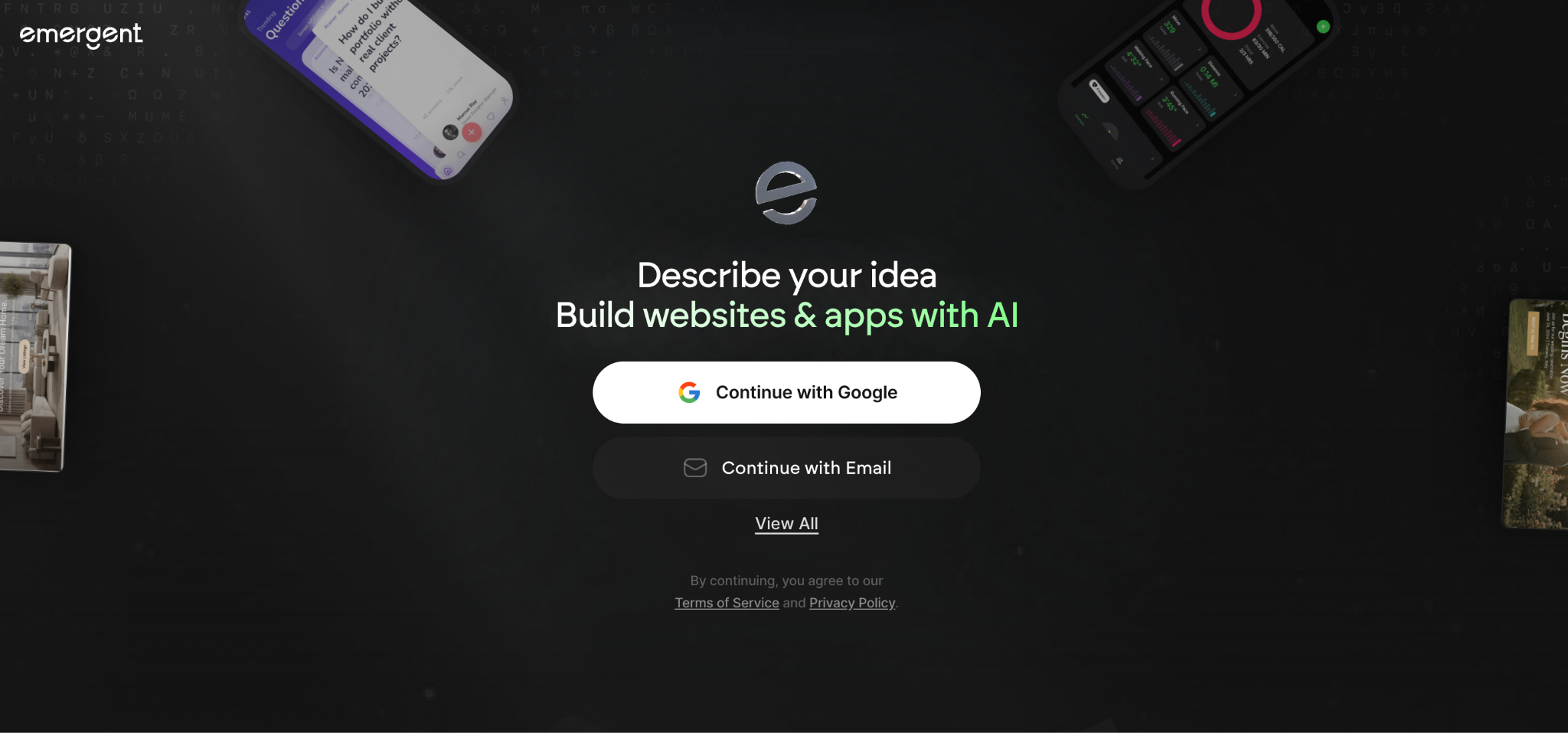
Emergent is the best Lovable alternative for going from a prompt to a deployable app with full code ownership.
Its multi-agent system designs, builds, tests, and deploys web or mobile apps to a live URL, and the code stays yours to connect to GitHub or edit in a built-in VS Code workspace.
Key features
- Multi-agent builds: Coordinated agents handle design through deployment.
- Code you own: Connect GitHub and edit in a built-in editor.
- Managed hosting: Live URLs with domains, analytics, and health checks.
Pros
- ✅ Deployable web and mobile apps that ship to a live URL
- ✅ Full code ownership and GitHub sync
- ✅ SOC 2 Type II and ISO 27001 certified
Cons
- ❌ Credit metering adds up on ambitious projects
- ❌ No centralized governance or self-hosting
Best for
- Non-technical founders shipping production apps
- Builders who outgrow prototypes
Pricing
Emergent is free with 10 monthly credits. Paid plans start at $20 a month for Standard, which includes 100 credits, with Pro at $200 a month for 750 credits. See Emergent's pricing.
7. Bubble
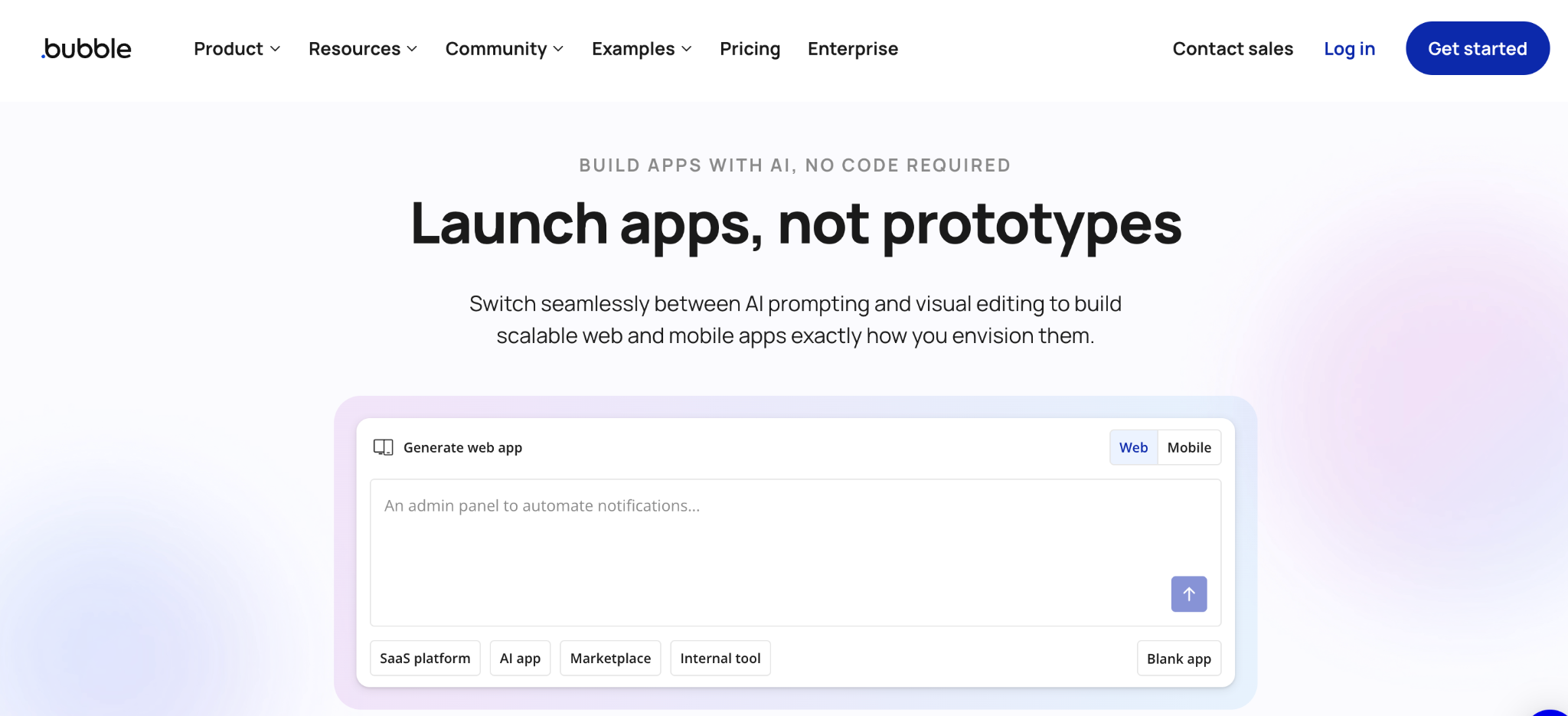
Bubble is the best Lovable alternative for mature no-code web apps with a visual builder.
It pairs drag-and-drop design with a visual workflow engine and an AI App Generator that scaffolds apps from prompts. Its long track record and plugin library make it a proven no-code choice.
Key features
- Visual editor: Drag-and-drop UI with a workflow logic engine.
- AI App Generator: Scaffolds an app from a prompt.
- Plugin marketplace: A large library extends functionality.
Pros
- ✅ Mature platform with a big community
- ✅ Visual iteration for non-technical builders
- ✅ iOS and Android apps in beta
Cons
- ❌ Steep learning curve despite being no-code
- ❌ No code export, since the runtime is proprietary
Best for
- Founders building web apps without code
- Teams wanting a proven no-code stack
Pricing
Bubble is free on its development tier. Paid plans start at $69 a month for Starter, with Growth at $249 a month and Team at $649 a month. Enterprise pricing is custom. See Bubble's pricing.
8. Cursor
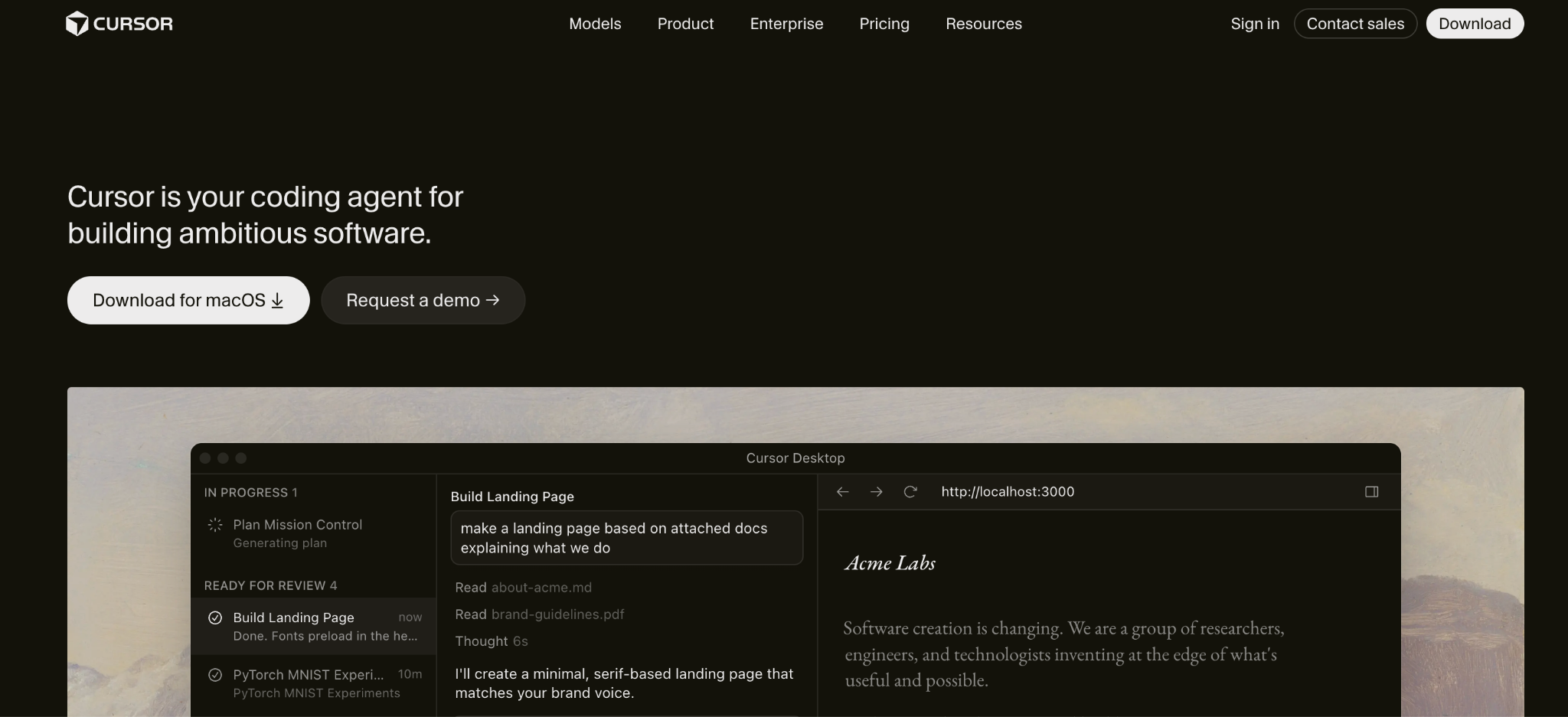
Cursor is the best Lovable alternative for developers who want an AI IDE over a prompt-first app builder.
It's an AI-first code editor that predicts code, answers questions about your codebase, and completes tasks with an agent. It targets developers who write and control their own stack.
Key features
- Agent mode: Completes multi-file tasks end to end.
- Codebase-aware chat: Indexes your whole project.
- Model choice: Route across GPT, Claude, and Gemini.
Pros
- ✅ Deep codebase understanding and control
- ✅ Works with your VS Code extensions and stack
- ✅ Strong agentic editing
Cons
- ❌ You need to know how to code
- ❌ Credit costs climb once you leave Auto mode
Best for
- Developers who want full stack control with AI
- Teams working in large codebases
Pricing
Cursor is free on the Hobby tier. Paid plans start at $20 a month for Pro, with Pro+ at $60 a month, Ultra at $200 a month, and Teams at $40 a user per month. See Cursor's pricing. For more, see our guide to Cursor competitors.
9. WeWeb
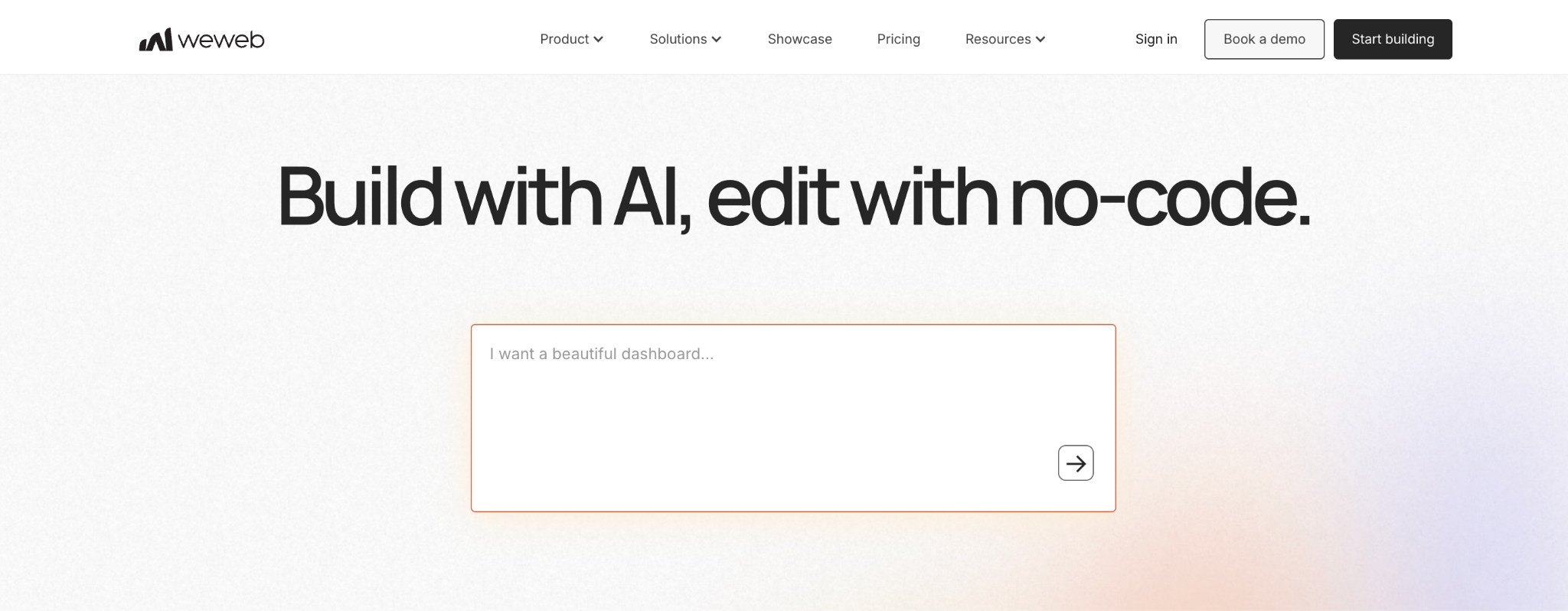
WeWeb is the best Lovable alternative for building a custom front-end on a backend you already run.
It's a visual front-end builder that exports a standard Vue.js app and connects to Xano, Supabase, or any REST or GraphQL API. It gives fine-grained design control that prompt-first tools often lack.
Key features
- Visual front-end: Fine-grained control over responsive UIs.
- Backend-agnostic: Connects to Xano, Supabase, or any API.
- Code export: Exports a standard Vue.js app.
Pros
- ✅ Strong design control for polished UIs
- ✅ No lock-in, since front-end and data stay separate
- ✅ Code export on paid plans
Cons
- ❌ Needs a separate backend to be useful
- ❌ Steeper than prompt-only builders
Best for
- Teams that already run a backend and want a better front-end
- Builders who want design control with export
Pricing
WeWeb is free with 1 million AI tokens. Paid plans start at $25 a month for Essential, which includes 10 million tokens, with Pro at $60 a month per developer and Partner at $95 a month per developer. Enterprise pricing is custom. See WeWeb's pricing.
10. Glide
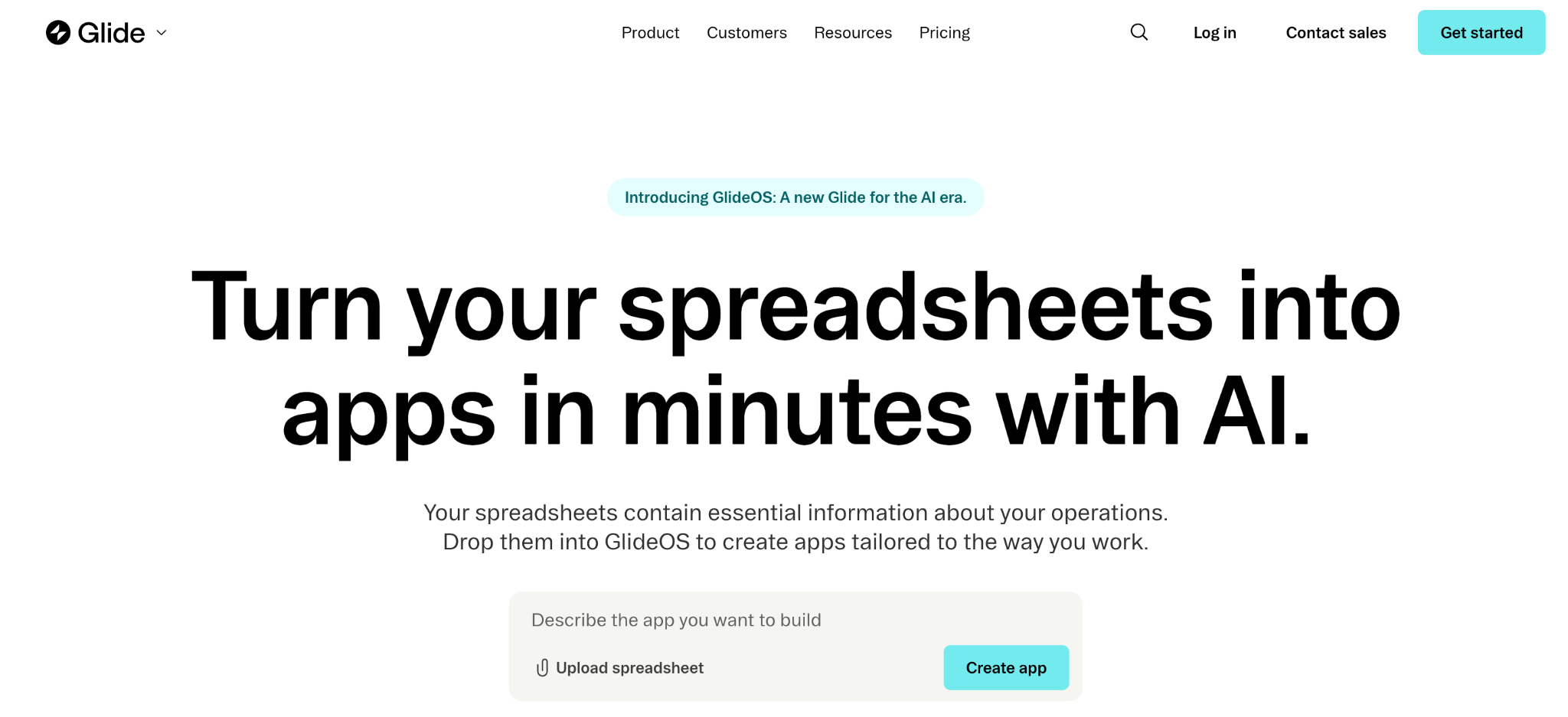
Glide is the best Lovable alternative for turning spreadsheet data into apps fast.
It connects to Google Sheets, Excel, or CSVs and auto-generates a mobile-responsive app UI you refine with drag-and-drop, plus AI-powered columns for common tasks.
Key features
- Spreadsheet-to-app: Auto-generates a UI from your data.
- Drag-and-drop: Refine layouts visually.
- Glide AI columns: One-click AI tasks like summarization.
Pros
- ✅ Fastest path from spreadsheet to app
- ✅ Approachable for non-technical builders
- ✅ Progressive web apps by default
Cons
- ❌ Limited for off-template custom UI or heavy logic
- ❌ AI features are one-click, with limited flexibility
Best for
- Teams whose data lives in spreadsheets
- Non-technical builders needing quick apps
Pricing
Glide is free forever on its starter tier. Paid plans start at $25 a month for Solo, which includes 100 credits, with Team at $125 a month plus $10 per member. Enterprise pricing is custom. See Glide's pricing.
11. UI Bakery
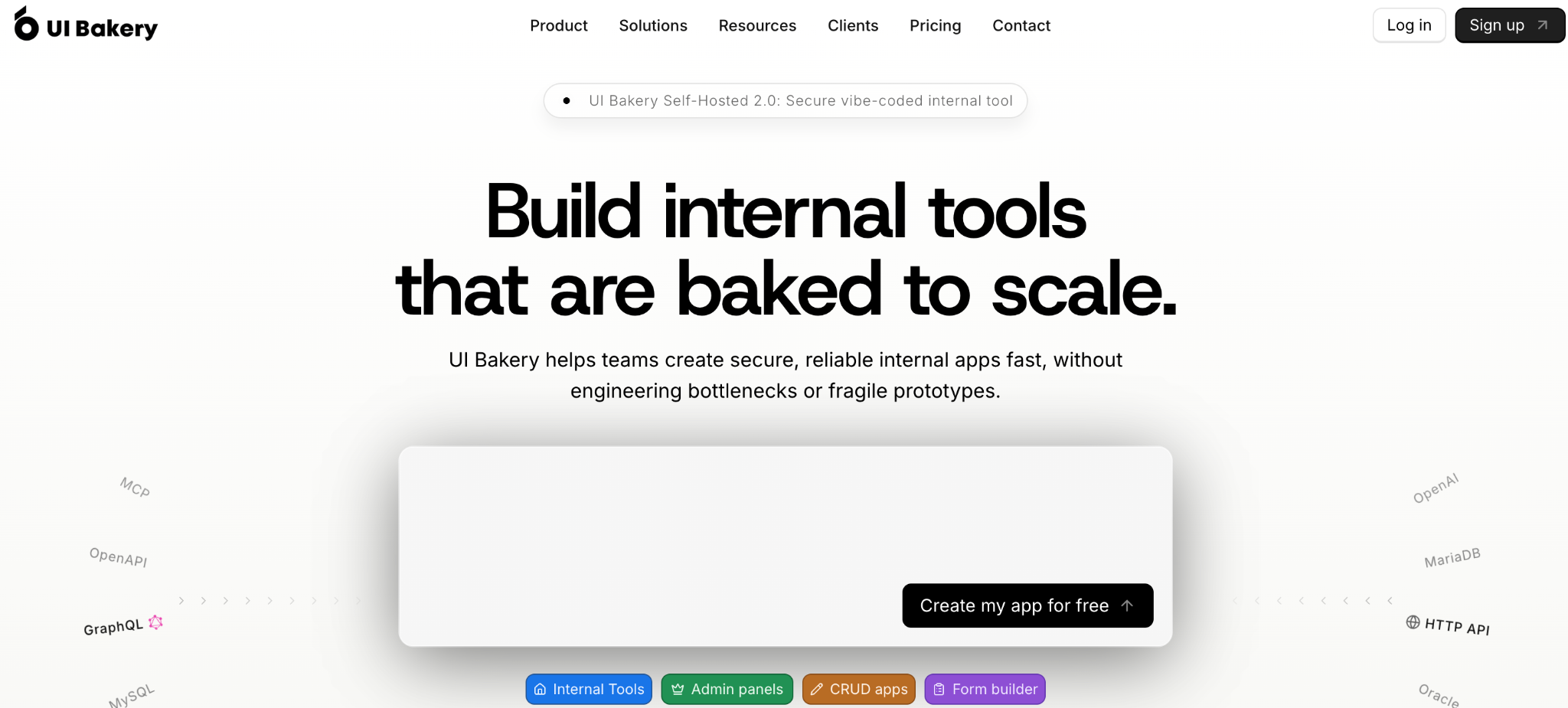
UI Bakery is the best Lovable alternative for building internal tools visually with AI support.
It's a low-code platform for admin panels and dashboards, with an AI app generator, an in-builder assistant, and self-hosting so your data stays in your environment.
Key features
- AI app generator: Builds apps on your data from prompts.
- Drag-and-drop: 80+ components for internal tools.
- Self-hosting: Run it in your own cloud or servers.
Pros
- ✅ Self-hosting keeps data in your environment
- ✅ AI generation plus a low-code editor
- ✅ Git-based version control
Cons
- ❌ No access to your app's underlying code
- ❌ Optimized only for internal tools
Best for
- Teams building internal tools visually
- Organizations wanting self-hosted low-code
Pricing
UI Bakery is free for one developer. Paid plans start at $25 a month per developer for Builder, with Team at $40 a month per developer. Enterprise pricing is custom. See UI Bakery's pricing.
How I tested these alternatives
I built the same small app in each tool, then tried to extend it, focusing on what matters most as I move off Lovable.
I also checked recent user reviews on G2 and Reddit for recurring complaints, and the 11 here came from a broader set of tools I looked at.
Here's what I weighed:
- Speed to first result: How fast you go from prompt to a working app, since that's Lovable's biggest draw.
- Iteration depth: How far you get by prompting before you need the visual editor or code.
- Code ownership: Whether you can export standard code or you're locked into a hosted runtime.
- Production readiness: Whether the app can handle live users, data, and governance after the demo.
How to choose a Lovable alternative
The right pick comes down to what happens after the first demo. A few questions to work through:
- Prototype or production? Bolt and v0 shine at fast demos, while Emergent, Replit, and Superblocks handle the users, data, and governance that come after.
- Do you need code ownership? If lock-in is a concern, prioritize tools that export standard code or sync with GitHub over those that rely on a proprietary runtime.
- Who's building? Non-technical builders tend to lean toward Base44, Bubble, or Glide, while developers tend to get more from Cursor or Replit.
- Consumer app or internal tool? Consumer-facing products fit Bolt, Base44, or Bubble, while governed internal tools on private data fit Superblocks or UI Bakery.
- How does pricing scale? Credit and token models get unpredictable fast, so model your total cost including iteration, well past the sticker price.
Final verdict
For most people leaving Lovable, Bolt is the closest match with better code control, while Base44 and Replit lead for full-stack no-code and hosted IDE building. For polished UI, v0 is the pick, and for production apps with code ownership, Emergent goes further.
If your need is governed by internal tools for private data, Superblocks covers a layer that consumer builders leave out. The best choice matches how far you need to take the app.
To try governed app building for yourself, start with the Superblocks Quickstart Guide, or book a demo to see Clark AI generating governed apps in your own environment.
Frequently asked questions
What is the best Lovable alternative?
The best Lovable alternative depends on your use case. Bolt leads for a near-identical prompt-to-app flow, Base44 for full-stack no-code, and Superblocks for governed internal apps. Most builders pick based on code ownership, production needs, and who's doing the building.
Is there a free Lovable alternative?
Yes, several Lovable alternatives have free tiers. Bolt offers 1M free tokens monthly, and Base44, Replit, v0, Emergent, Bubble, and Glide all have free plans. Most cap usage, so run a full build before committing.
Why do people switch from Lovable?
People switch from Lovable mainly over pricing and lock-in. Its per-prompt credits climb during heavy debugging, apps run on a hosted runtime that's hard to leave, and backend control is limited. Builders moving past prototypes often need code ownership.
What is the best Lovable alternative for enterprises?
The best Lovable alternative for enterprises is Superblocks, which builds internal tools on private data with RBAC, audit logs, and hybrid deployment. See our Lovable pricing guide for details.
Are there Lovable alternatives for mobile apps?
Yes, several Lovable alternatives handle mobile. Bolt and Replit build React Native apps through Expo, and Emergent and Bubble support mobile builds. Most still need an external service for App Store submission.
What is the best Lovable alternative for building on your own data?
The best Lovable alternatives for building on your own data are Superblocks and Glide. Superblocks connects to Snowflake, Salesforce, and internal APIs, maintaining governance, while Glide turns spreadsheets into apps. For a broader comparison, see our Bolt alternatives guide.
At Virgin Voyages, non-technical teams now build their own AI apps, with IT governance fully intact. The result: 15+ production apps, seven departments onboard, and zero dedicated frontend engineers.
At Matthews, a marketing manager with zero coding background built an app that auto-generates offering memorandums, cutting turnaround from days to hours. See how the brokerage is putting AI builders on every team, with full governance intact.


Stay tuned for updates
Get the latest Superblocks news and internal tooling market insights.
Request early access
Step 1 of 2
Request early access
Step 2 of 2

You’ve been added to the waitlist!
Book a demo to skip the waitlist
Thank you for your interest!
A member of our team will be in touch soon to schedule a demo.
production apps built
days to build them
semi-technical builders
traditional developers
high-impact solutions shipped
training to get builders productive
SQL experience required
See the full Virgin Voyages customer story, including the apps they built and how their teams use them.

"Those tools are great for proof of concept. But they don't connect well to existing enterprise data sources, and they don't have the governance guardrails that IT requires for production use."
Table of Contents
%20(1).png)

Multiple authors
12 AI Agent Deployment Best Practices [2026]
AI agent deployment best practices that move an agent from offline evals to full traffic in stages, with scoped tools and a way to revoke it mid-task.
%20(1).png)
%20(1).png)